Recueil de poèmes en hommage aux deux auteurs
Le divan d'Istanbul | Alessandro BARBERO

En poursuivant votre navigation sur ce site, vous acceptez l'utilisation de cookies. Ces derniers assurent le bon fonctionnement de nos services. En savoir plus.
L’Istanbul Modern, cet imposant musée privé niché sur la rive européenne du Bosphore, et situé dans le quartier de Karaköy, met un point d’honneur à révéler à ses visiteurs les secrets de l’art contemporain turc et son évolution depuis le début du 20ème siècle. L’exposition Past and Future vous fera ainsi voyager sur le fleuve du temps.
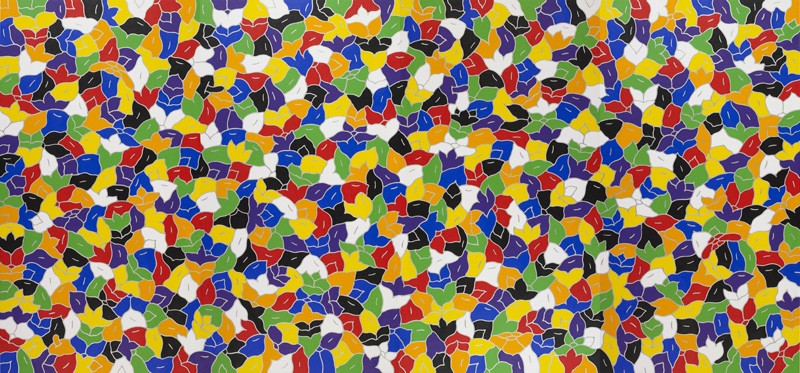
Ekrem Yalçındağ – Kontrastlar
29 sept 2014
Catégorie : Bonnes adresses, Events & Party, Pour le Fun, Presse & Médias
 C’est l’évènement people de cette rentrée, ça c’est passé à Venise ce Week-end et toute la presse en parle … normal c’est la star américaine Georges Clooney et Amal Alamuddin qui ses ont passés la bague aux doigts entouré de 135 invités VIP.
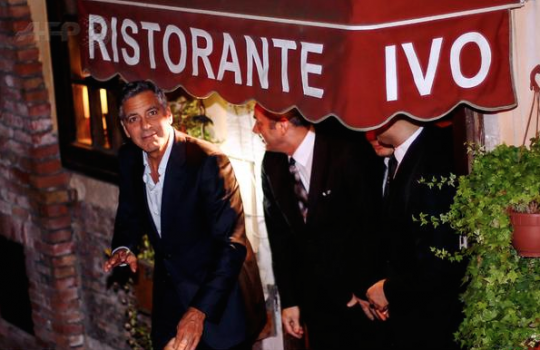
Vendredi soir Georges Clooney avait dîné en petit comité avec ses potes et son père dans un petit bistrot de la cité lacustre, histoire d’enterrer sa vie de garçon… il avait choisi le restaurant Da Ivo, sur la place Saint-Marc, un des plus anciens et traditionnels restaurants de Venise qui a déjà reçu toutes les plus grandes stars du monde, San Daniele, pâtes, risotto, fruits de mer sont bien sûr à la cart
 |
On surtaxe tellement les entrepreneurs qu'ils s'en vont à l'étranger pour investir. Comment, dans ces conditions, redresser la France ? Lire |
 |
Un rapport parlementaire préconise le report d'une fermeture jugée trop lourde pour les finances de l'État. Lire |
 |
La dette publique dépasse les 2 000 milliards d'euros
|
|||||||||||||||||||||||||||||||||||||||||
 Douleur : l'influence du psychisme
 |
Sénat : sortons du débat simpliste ! La suppression du Sénat, ce serpent de mer de la politique, n'est pas la façon la plus efficace de rénover le parlementarisme. Propositions. Lire |

 Le 3 Octobre, Artcurial organisera à Paris une vente de tableaux et dessins anciens et du 19ème, de sculptures et de cadres. Nous retiendrons une Ecole flamande du début du 17ème de l’entourage de Paul Vredeman de Vries. Cette huile sur panneau parqueté représentant une scène galante dans un décor palatial est estimée entre 15 000 et 20 000 € (Lot 322). Le 5 Octobre, la maison Mercier & Cie proposera à Lille une grande vente cataloguée. Le lot phare de cette vente est une huile sur panneau du 17ème de Jan II Brueghel dit « Le jeune » et d’Hendrick Van Balen représentant une allégorie de la terre et estimée entre 150 000 et 200 000 € (Lot 307, photo ci-contre).
 |
SPORT Le Paris SG reçoit le 30 septembre le FC Barcelone lors de la deuxième journée de la Ligue des champions. Le Barça, porte-étendard de l'identité catalane, est détenu par ses supporteurs actionnaires, les « socios ». |
 |
Le budget de la Sécurité sociale prend l'eau de toutes parts. Pour en colmater quelques brèches, les familles sont réquisitionnées. Lire |

http://boutique.gaultmillau.fr/Boutique/17-abonnement-magazine-6-n.html


http://www.info-presse.fr/fiches/vins-saveurs-traditions_2516_gp.htm

 180°C est LA Revue culinaire indispensable aux esthètes, aux bons vivant et à tous ceux pour qui le plaisir de manger et de cuisiner est une valeur primordiale à partager. Son contenu garanti 100% original est orienté vers la découverte et aborde des sujets sur des producteurs et des chefs sourcés pluriels et iconoclastes. Gérée par une rédaction totalement indépendante permettant une liberté d’expression et un ton personnel pour un contenu sérieux et sincère.
180°C parait tous les 6 mois et est disponible dans les librairies indépendantes, les FNAC, les Relay gares et aéroports. Si vous ne trouvez pas la Revue culinaire près de chez vous, vous pouvez la commander directement sur le site ou nous contacter et nous vous orienterons vers le point de vente le plus proche de chez vous.